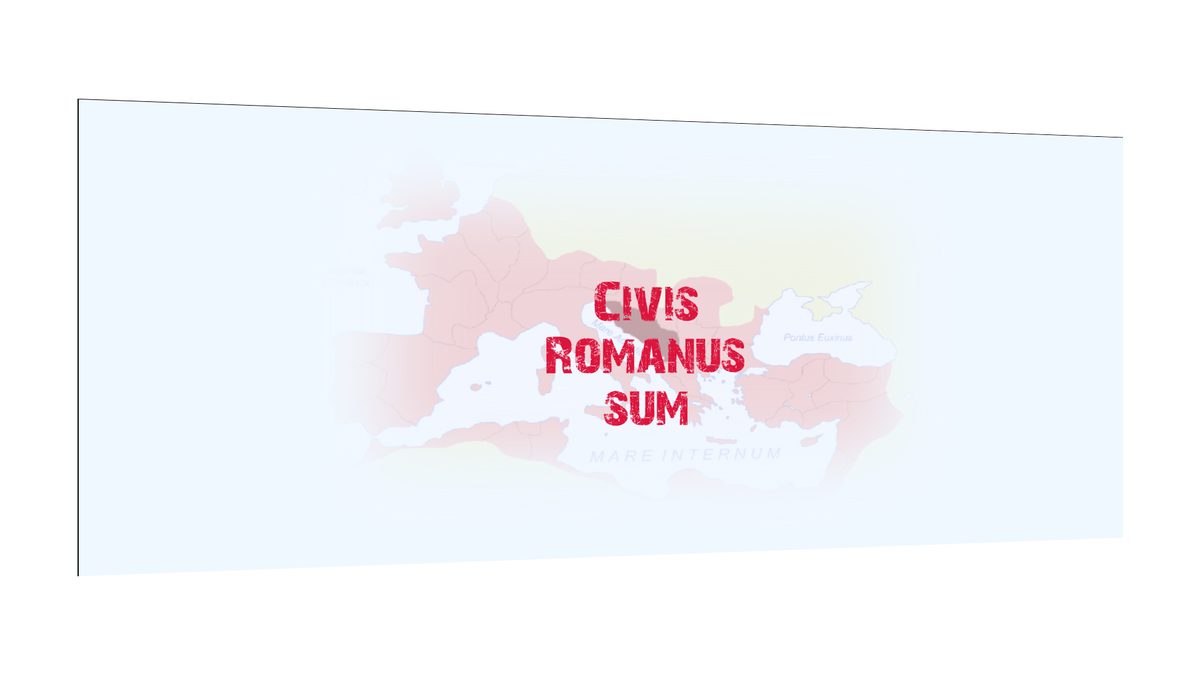
🏛️ Politica · Editoriale · Civiltà Occidentale · Luglio 2026Civis Romanus sum.
L'Occidente allo specchio
Vent'anni senza Oriana Fallaci. Le idee sopravvivono agli anniversari. Le civiltà, invece, sopravvivono soltanto se ricordano chi sono.
Di Giuseppe Arnò·Edizione 2548 · Luglio 2026
Giuseppe Arnò
Civis Romanus sum.
Tre parole che un tempo bastavano a definire un'appartenenza. Oggi dovrebbero bastare almeno a ricordarci che ogni civiltà sopravvive finché conserva coscienza di sé.
Civis Romanus sum. Non era una semplice formula. Era un passaporto morale, prima ancora che giuridico. Bastavano tre parole per evocare una civiltà, un diritto, una cultura, un modo di concepire il mondo. Un cittadino romano non portava soltanto un nome: portava un'eredità.
Forse oggi, nell'epoca delle identità liquide, dei confini elastici e delle mode globali che cambiano più rapidamente delle stagioni, quella locuzione latina potrebbe sembrare un reperto da museo. Eppure è proprio nei musei che si custodiscono le cose preziose, non quelle inutili.
Vent'anni fa scompariva Oriana Fallaci. Il tempo ha compiuto il suo mestiere: ha consumato le polemiche, ma non ha cancellato le domande che ella pose con ostinazione. Anzi, molte di esse sembrano essersi accomodate in prima fila nel teatro del XXI secolo.
"L'Occidente non dimentichi chi è."
— Oriana Fallaci
Non era un invito alla nostalgia, bensì alla memoria. Due concetti che spesso vengono confusi. La nostalgia guarda indietro con malinconia; la memoria guarda avanti con consapevolezza.
Viviamo in un tempo nel quale tutto scorre, come ricordava Eraclito. Panta rei. Cambiano gli equilibri geopolitici, le economie, le tecnologie, perfino il modo di parlare. Ma esistono realtà che non possono essere trattate come applicazioni da aggiornare ogni sei mesi: la storia, la cultura, l'identità di un popolo.
Le radici dell'Europa
L'Europa non nasce da un regolamento comunitario né da una direttiva scritta in burocratese. Nasce molto prima.
Nasce ad Atene, dove si impara che la libertà richiede cittadini e non sudditi. Nasce a Roma, dove il diritto diventa il linguaggio della convivenza civile. Nasce a Gerusalemme, dove la dignità della persona assume un valore universale. Il resto è amministrazione.
Già Erodoto raccontava che gli Ateniesi decisero di opporsi all'invasione persiana non soltanto per ragioni militari, ma perché si riconoscevano appartenenti allo to ellenikòn: comunanza di sangue, lingua, santuari, riti e costumi. Una definizione che oggi farebbe probabilmente convocare un convegno internazionale per discuterne la "problematicità". Gli antichi, invece, combattevano. Non perché odiassero gli altri, ma perché amavano sé stessi.
Ed è qui che il dibattito contemporaneo inciampa spesso nella stessa pietra. Difendere un'identità non significa disprezzarne altre. Custodire la propria casa non equivale a incendiare quella del vicino.
Esiste una differenza sostanziale fra apertura e dissoluzione. L'Occidente è diventato grande proprio perché ha saputo dialogare, assimilare, innovare. Ma ogni dialogo presuppone due interlocutori riconoscibili. Se uno dei due rinuncia a essere sé stesso, il dialogo cessa e resta soltanto un lungo monologo della confusione.
Oggi il rischio più sottile non è tanto un'invasione di eserciti quanto quella delle idee che suggeriscono che tutte le culture siano identiche, tutte le tradizioni intercambiabili, tutti i valori equivalenti.
"Se tutto vale allo stesso modo, alla fine non vale più nulla."
— Giuseppe Arnò
La globalizzazione ha portato opportunità straordinarie. Ha avvicinato continenti, economie e persone. Ma quando pretende di trasformare il mondo in un gigantesco centro commerciale dove perfino le identità diventano prodotti standardizzati, allora smette di essere uno strumento e diventa un fine. E le civiltà che smettono di distinguersi finiscono inevitabilmente per confondersi.
Nosce te ipsum
Esiste però un principio che rimane attuale quanto il celebre Nosce te ipsum: chi dimentica la propria identità diventa facilmente ciò che altri decidono per lui.
Per questo l'Europa dovrebbe recuperare il coraggio della propria autocoscienza. Non per erigere muri contro il mondo, ma per costruire fondamenta sotto la propria casa. Anche perché le case senza fondamenta non hanno bisogno di essere conquistate: basta aspettare che crollino da sole.
E forse il miglior omaggio che possiamo rendere a Oriana Fallaci, vent'anni dopo, non consiste nel trasformarla in un'icona da celebrare una volta l'anno. Le idee, come le civiltà, non vivono di commemorazioni ma di confronto.
"Un popolo che perde la memoria perde anche il futuro."
— Indro Montanelli
Perché il problema dell'Occidente non è sapere dove sta andando. È ricordarsi, prima di partire, da dove viene.
Giuseppe Arnò è giornalista e scrittore. Questo editoriale è pubblicato nel numero di luglio 2026 — Edizione 2548 — de L'Ora di Ottawa.
Giuseppe Arnò
Civis Romanus sum.
Three words that once sufficed to define a belonging. Today they should at least suffice to remind us that every civilisation survives only as long as it retains consciousness of itself.
Civis Romanus sum. It was not a mere formula. It was a moral passport — before it was a legal one. Three words were enough to evoke a civilisation, a system of law, a culture, a way of conceiving the world. A Roman citizen did not merely carry a name: he carried an inheritance.
Perhaps today, in the age of liquid identities, elastic borders and global fashions that change faster than the seasons, that Latin phrase might seem like a museum exhibit. And yet it is precisely in museums that precious things are kept — not useless ones.
Twenty years ago, Oriana Fallaci passed away. Time has done its work: it has worn down the polemics, but has not erased the questions she posed with such persistence. Indeed, many of them seem to have taken front-row seats in the theatre of the twenty-first century.
"The West must not forget who it is."
— Oriana Fallaci
This was not an invitation to nostalgia, but to memory. Two concepts often confused. Nostalgia looks backward with melancholy; memory looks forward with awareness.
We live in a time when everything flows, as Heraclitus reminds us. Panta rei. Geopolitical balances shift, economies change, technologies evolve, even the way we speak. But there are realities that cannot be treated like applications to be updated every six months: history, culture, the identity of a people.
The Roots of Europe
Europe was not born from a Community regulation or a directive written in bureaucratic jargon. It was born much earlier.
It was born in Athens, where one learns that freedom requires citizens, not subjects. It was born in Rome, where law becomes the language of civil coexistence. It was born in Jerusalem, where the dignity of the person takes on universal value. The rest is administration.
Herodotus already told us that the Athenians decided to resist the Persian invasion not only for military reasons, but because they recognised themselves as belonging to to ellenikòn: a community of blood, language, sanctuaries, rites and customs. A definition that today would probably prompt an international conference to debate its "problematic nature." The ancients, instead, fought. Not because they hated others, but because they loved themselves.
And this is where contemporary debate often trips on the same stone. Defending an identity does not mean despising others. Guarding one's own home does not mean setting fire to the neighbour's.
There is a substantial difference between openness and dissolution. The West became great precisely because it knew how to engage in dialogue, assimilate and innovate. But every dialogue presupposes two recognisable interlocutors. If one of them renounces being itself, the dialogue ceases — and all that remains is a long monologue of confusion.
"If everything is worth the same, in the end nothing is worth anything."
— Giuseppe Arnò
Globalisation has brought extraordinary opportunities. It has brought continents, economies and people closer together. But when it sets out to transform the world into a giant shopping centre where even identities become standardised products, it ceases to be a tool and becomes an end in itself. And civilisations that stop distinguishing themselves inevitably end up blending into one another.
Nosce te ipsum
There is a principle that remains as relevant today as the ancient Nosce te ipsum: whoever forgets their own identity easily becomes what others decide for them.
This is why Europe should recover the courage of its own self-awareness. Not to erect walls against the world, but to build foundations beneath its own house. Because houses without foundations do not need to be conquered — one simply waits for them to collapse on their own.
And perhaps the best tribute we can pay to Oriana Fallaci, twenty years on, is not to turn her into an icon to be celebrated once a year. Ideas, like civilisations, do not survive through commemoration — they survive through engagement.
"A people that loses its memory also loses its future."
— Indro Montanelli
Because the problem of the West is not knowing where it is going. It is remembering, before setting out, where it came from.
Giuseppe Arnò is a journalist and writer. This editorial is published in the July 2026 edition — No. 2548 — of L'Ora di Ottawa.