All'indomani dell'ultima campagna referendaria, come è cambiato il bacino elettorale in Italia? Sembra finito il tempo dei blocchi ideologici compatti e si delinea sempre più un segmento fluido di giovani tra i 18 e i 34 anni, spesso studenti fuorisede, precari o «nuovi italiani» — circa 1,4–2,5 milioni di potenziali elettori — i quali non si riconoscono più nell'appartenenza storica o culturale, ma in una rappresentanza identitaria mutevole, che si concentra di volta in volta su diritti civili, cittadinanza, ambiente.
Per comunicare con questo settore la politica ha «aggiornato il suo software» utilizzando tutte le tecnologie digitali oggi a disposizione per intercettare il consenso di questo mondo fluido e instabile, abituato ai tempi velocissimi dei social.
La TikTokizzazione della Politica
La mutazione del linguaggio politico inizia qui. Poche parole, molte immagini, e la figura del leader che deve diventare un «manager dei diritti» — reali o presunti — ma anche un frontman pubblicitario. È ciò che si definisce la TikTokizzazione della politica: il passaggio dal discorso complesso allo spot ripetitivo (Salario Minimo, Clima, Sanità).
Bisogna «bucare l'algoritmo» per trasformare la politica in un merchandising di valori, raggruppando sotto un unico ombrello comunicativo argomenti diversi: clima, diritti LGBTQ+, giustizia sociale.
"Un leader vuoto di contenuti tecnici è fisiologicamente più esposto alla «cattura» da parte di poteri profondi, lobby e burocrazie ministeriali, che scrivono le norme reali mentre il leader scatta selfie nelle piazze."
Il PNRR: Lo Spot e il Rigo di Bilancio
Quando i leader mancano di visione strategica a lungo termine, anche i mezzi più abbondanti rischiano di perdersi in rivoli sterili. Il PNRR è l'esempio concreto di questo cortocircuito. Mentre la politica annunciava il «bancomat della rinascita», l'Europa imponeva regole rigide basate sulla performance, così ci si ritrova a piegarsi a regole decise a Bruxelles, rischiando di costruire infrastrutture — asili nido — senza una politica demografica o gestionale che le renda sostenibili nel tempo.
Il PNRR non è un classico fondo perduto, ma un contratto di prestazione tra lo Stato e Bruxelles. I poteri tecnici e finanziari (BCE, Commissione UE) dettano l'agenda economica reale del Paese per i prossimi 20 anni attraverso le «condizionalità» legate ai prestiti. I tecnici si sono concentrati sulla capacità di spesa — entro quando dobbiamo spendere i soldi? — e non sulla qualità strategica dell'investimento, che spetta alla politica, la quale tuttavia, senza visione a lungo termine, è incapace di elaborarne le conseguenze.
Il Caso Schlein: Immagine e Sostanza
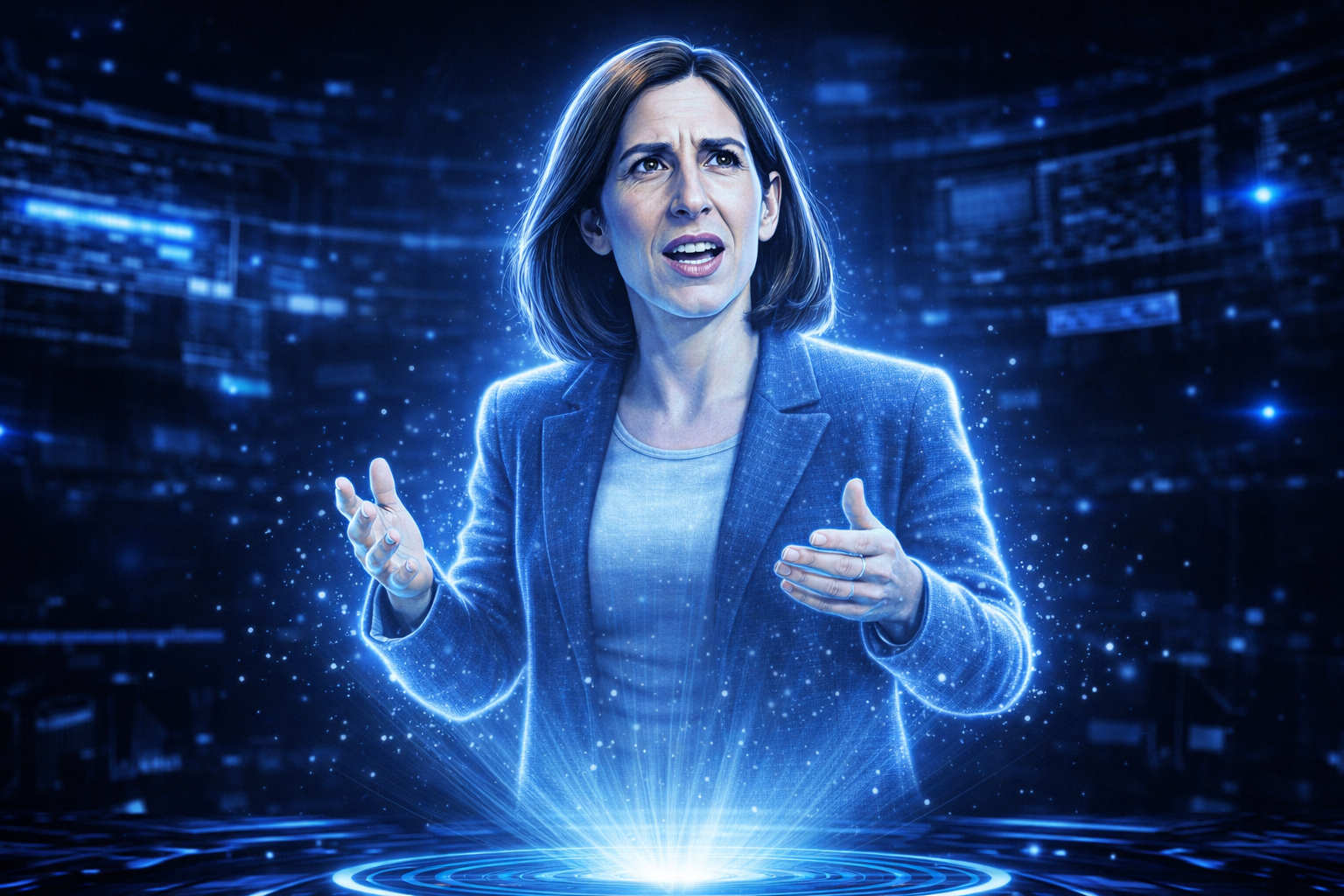
Con un target verso i giovani, studenti fuori sede, nuovi italiani in cerca di cittadinanza, il bacino a cui si rivolge è interessante: un potenziale di 1,4–2,5 milioni di elettori solo per la riforma della cittadinanza. In questo contesto si inserisce il leader-ologramma, che proietta un'immagine rassicurante mentre dietro lo schermo altri attori prendono decisioni irreversibili.
Lo spot pubblicitario promette che tutti saranno felici. Con tre parole ripetute incessantemente, tutti crederanno che «quel detersivo lava così bianco che più bianco non si può». Ma nulla si sa dei costi e delle conseguenze di quel «bianco».
Elly Schlein incarna perfettamente il paradosso della leadership contemporanea. Nonostante un background d'élite (figlia di accademici, triplo passaporto, formazione nelle campagne di Obama), la segretaria ha adottato un'estetica «popolare» e un linguaggio tipico del marketing digitale. Schlein risulta tra i leader con il più alto tasso di «engagement» su temi a singolo obiettivo (single-issue). Ed è proprio qui il vuoto di competenze: un leader che è solo un manifesto è estremamente vulnerabile — finisce per firmare ciò che gli viene sottoposto dai grandi apparati, convinto che basti mantenere il consenso sui «diritti civili» per aver fatto il proprio dovere.
In questo scenario, il potere reale si sposta nelle seconde e terze linee — quelle che non si vedono mai in TV — che scrivono le regole mentre il leader scatta il selfie.
La domanda che bisogna porsi è: esiste ancora spazio per una classe dirigente che unisca cultura tecnica e visione politica, o siamo destinati a scegliere tra «ragionieri» e «influencer»? È una domanda urgente, perché occorrerà una classe politica capace di affrontare il mondo dopo Trump, Putin e Netanyahu. L'algoritmo si auto-istruisce, evolve le sue strategie tecniche — ma i contenuti, chi glieli fornirà?
In the wake of Italy's last referendum campaign, how has the country's electoral landscape changed? The era of compact ideological blocs appears to be over, giving way to an increasingly fluid segment of young people aged 18 to 34 — often students living away from home, precarious workers, or "new Italians" — numbering roughly 1.4 to 2.5 million potential voters who no longer identify through historical or cultural affiliation but through a shifting, identity-based representation that focuses by turns on civil rights, citizenship, and the environment.
To communicate with this segment, politics has "updated its software," deploying every available digital technology to chase and intercept the consensus of this highly fluid, unstable world — a world accustomed to the lightning-fast pace of social media.
The TikTokization of Politics
The mutation of political language begins here. Few words, many images, and the figure of the leader who must become a "rights manager" — real or perceived — and also a promotional frontman or frontwoman. This is what defines the TikTokization of politics: the shift from complex discourse to the repetitive soundbite (Minimum Wage, Climate, Health Care).
One must "break through the algorithm" to transform politics into a merchandising of values, grouping under a single communicative umbrella diverse arguments and different struggles: climate, LGBTQ+ rights, social justice.
"A leader empty of technical content is physiologically more exposed to capture by deep powers, lobbies, and ministerial bureaucracies — who write the real norms while the leader takes selfies in the squares."
The PNRR: The Soundbite and the Balance Sheet
When leaders lack long-term strategic vision, even the most abundant available means risk dissipating into sterile rivulets. The PNRR is the concrete example of this short circuit. While politics announced the "ATM of national renewal," Europe imposed rigid performance-based rules — and so Italy finds itself bending to objectives decided in Brussels, risking the construction of infrastructure (nursery schools, for instance) without the demographic or management policy to make them sustainable over time.
The PNRR is not a classic non-repayable grant but a performance contract between the State and Brussels. The technical and financial powers — the ECB, the EU Commission — dictate the country's real economic agenda for the next 20 years through the "conditionalities" tied to the loans. The technicians focused on spending capacity — by when must we spend the money? — rather than on the strategic quality of the investment, which falls to politics: a politics that, without long-term strategic vision, is incapable of elaborating the consequences.
The Schlein Case: Image and Substance
Targeting young people, students living away from home, and new Italians seeking citizenship, the potential electoral basin is significant: 1.4 to 2.5 million voters tied to the citizenship reform alone. This is where the hologram-leader enters — projecting a reassuring image while, behind the screen, other actors make irreversible decisions.
The advertising spot promises that everyone will be happy. With three words repeated incessantly, all will eventually believe that "this detergent washes so white that nothing could be whiter." But nothing is said of the costs and consequences of that "whiteness."
Elly Schlein perfectly embodies the paradox of contemporary leadership. Despite an elite background — daughter of academics, triple passport, training on Obama's American electoral campaigns — the party secretary has adopted a "popular" aesthetic and the language typical of digital marketing. Schlein ranks among the leaders with the highest "engagement" rate on single-issue topics. And here lies the competence vacuum: a leader who is only a manifesto is extremely vulnerable — she ends up signing whatever is submitted to her by the great apparatuses (both national and supranational), convinced that maintaining consensus on "civil rights" is sufficient to have done her duty.
In this scenario, real power shifts to the second and third tiers — those never seen on television — who write the rules while the leader takes the selfie.
The question to be asked is: is there still room for a governing class that unites technical culture and political vision, or are we destined to choose between "accountants" and "influencers"? It is an urgent question, because a political class will be needed capable of facing the world after Trump, Putin, and Netanyahu. The algorithm self-instructs and evolves its technical strategies — but its content: who will provide it?